
Henry James Holland was born on 12th August, 1907 in Wentworth (30820/1907). At that point, his sister Grace was about 19 mths old.
Early years: refer to Aunty Grace’s Memoirs tell us that they moved around a lot because of the dad’s job, looking after ‘tanks’ water storage called ‘dams’ in Queensland. They were often at home with the mum only and she must have been a very feisty woman to keep them safe. Her own telling of their growing up makes interesting reading.
1906-Grace-Holland-Vincents-story.pdf
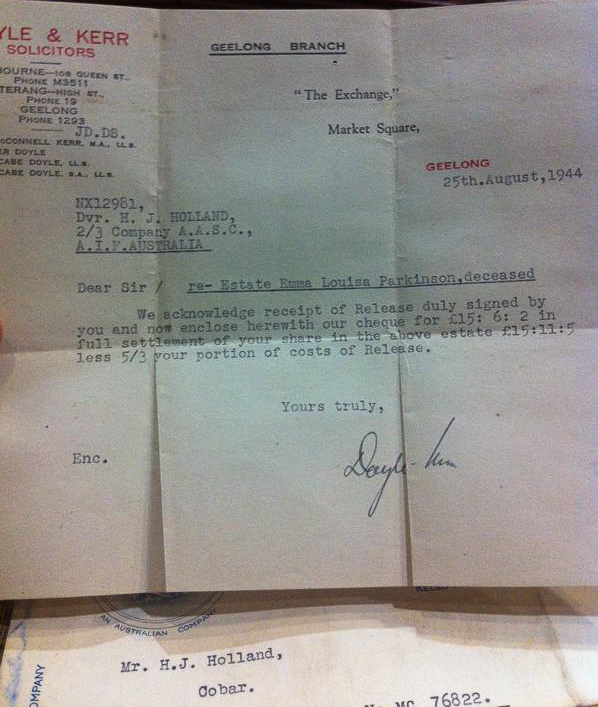
Dad seemed to have had quite a soft spot for his youngest sister Mary Helen, and recalled that he’d once had to rescue her after she was jumping up and down on a well cover. It’s a wonder they all survived. They do seem to have had support from their father’s sisters as well, particularly Grace and Rose (Dunstan), who was a nurse and served in the First World War. She married late in life and is buried with her parents in Wentworth, NSW on the border with Victoria, at the confluence of the Darling and the Murray Rivers. They also maintained contact with their mother’s younger sisters. Dad received £15 in his Aunt Louie’s will in 1944. (Emma Louise Hardie (Parkinson) b. 4 Aug 1881, Murtoa, Victoria, Reg. No18232, d.8 Jun 1942 aged 61, Murtoa, Victoria, Australia.)
1919 (From Grace’s story)
Dad drew a block on Tiltaraga Stn (Station) He called it Marma. Harry was 11½ yrs old. But they didn’t go out as the neighbour Mr May, kept writing & saying there was no feed or water on the place. So Dad took a snagging job on the Darling River, anyway when Dad came home from that, Mum said to him, I have read that there has been rain up there, so Dad went up in March 1919 & found grass a foot high & both tanks full & Mays cattle in his paddocks, so he came back & took Mum & 6 of the children up, leaving Harry with his Sister Grace (Collingbourne) & me with his Mother. (to go to school?). Harry went up in 1920.
August 1962
Dad definitely had at least Primary schooling, he had good handwriting and spelt well. He was a very keen reader and subscribed to a monthly book club when we were living at Glendon. I have his copy of ‘Lassiter’s Last Ride’, gifted to him by grandma (Stella Daisy) in 1950. He was a fan of poets ‘Banjo’ Patterson and writer Jon Cleary, author of ‘The Sundowners’ and was a good friend of Dot’s brother Hamilton.
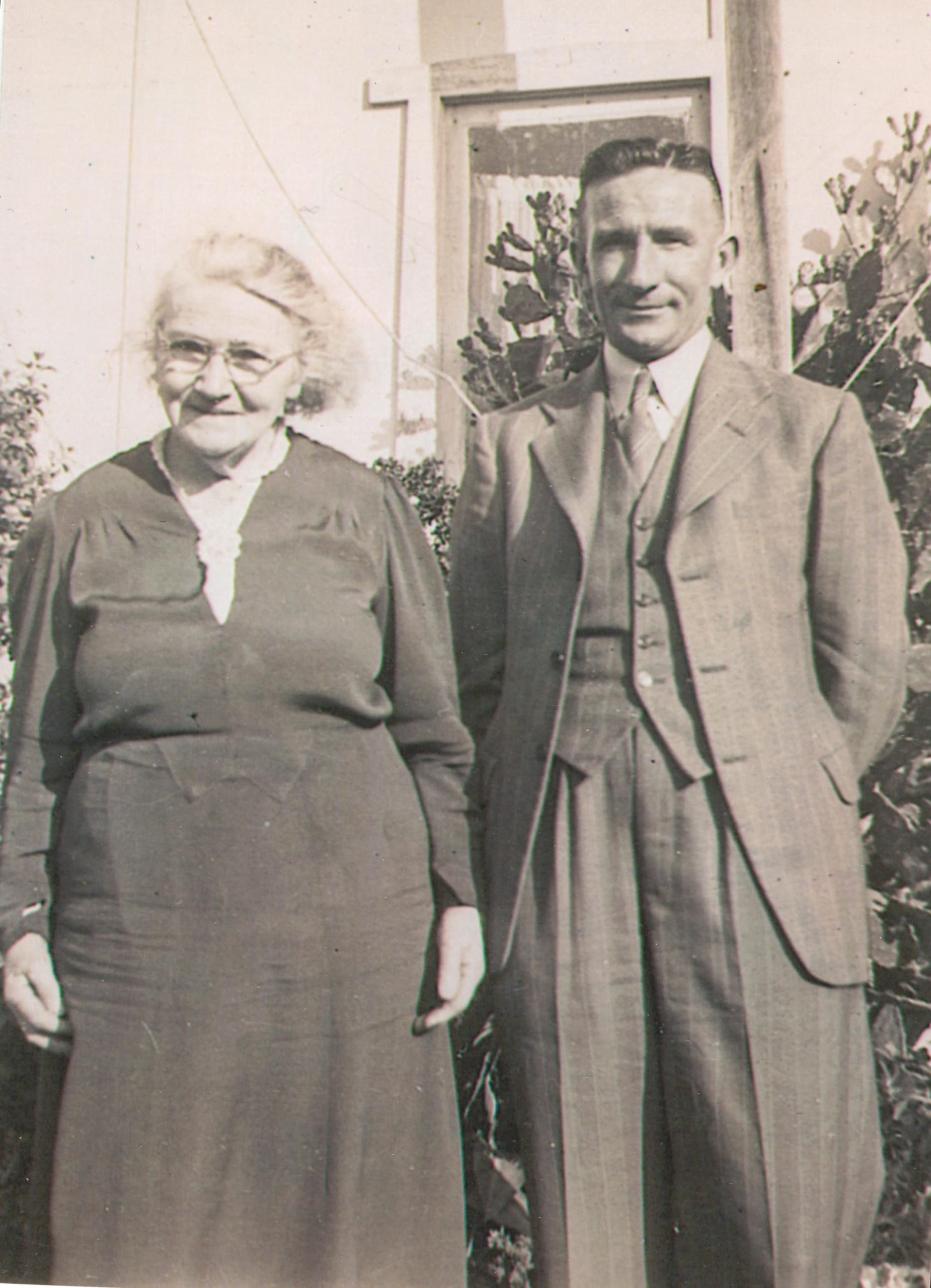
Marma is well over 100km south west of Cobar and even today all the roads are not sealed, so at that time the journey into ‘town’ would have not been easy.
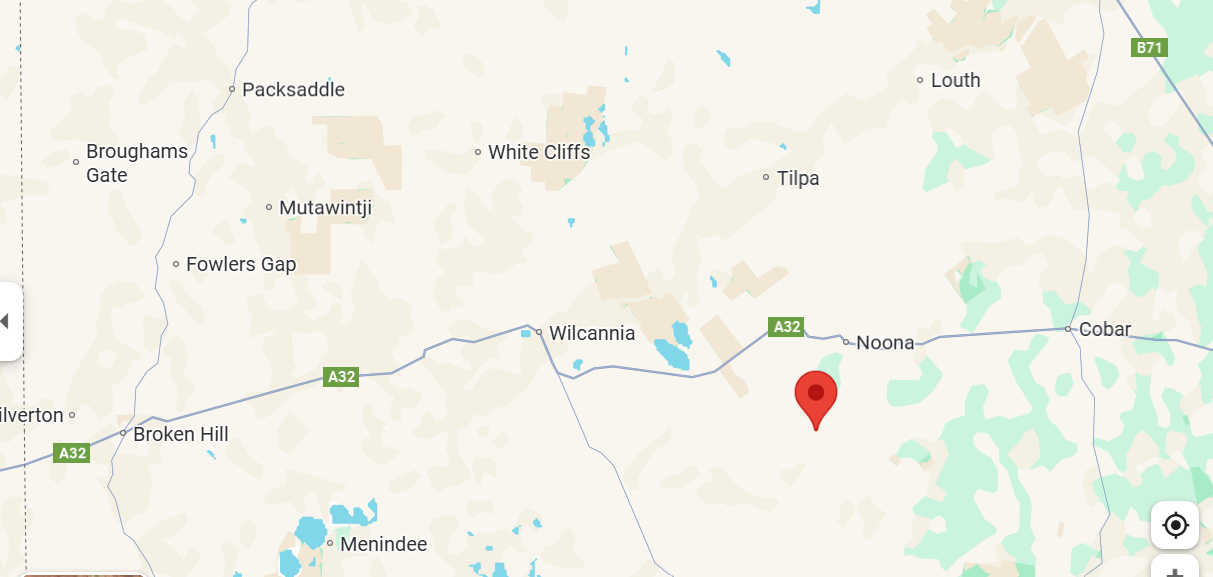
1920 HJH moved to Marma, He worked on Marma, mainly as a stockman, but also appears to have been a drover and a camp cook (dad told me this himself and how he learnt to cook rice the hard way (one cup of uncooked rice per person), and order bananas (the hard way – how fast they ripen!). He also worked with aboriginal stockmen and was very impressed by their abilities in tracking and living off the land. Things like how they would make flour from a plant he called ‘nardoo’. The seeds were ground, mixed with water, and baked over fire.
Nardoo, (Marsilea drummondii) is a species of fern known by the common name nardoo. It is native to Australia, where it is widespread and common, particularly in inland regions. It is a rhizomatous perennial aquatic fern that roots in mud substrates and produces herbage that floats on the surface of quiet water bodies.
He did like a bit of a flutter on the horses apparently, as he had a well folded copy of the Melbourne Cup winners to 1927. You can see the famous ‘Carbine’, which won in 1900, after placing second in 1899. This brochure would have been prepared before the 1928 race, which was the the year before the famous champion Phar Lap appeared. Phar Lap, ridden by his jockey Jim Pike, won the 1930 Melbourne Cup by three lengths. He also competed in 1929 and 1931 but was handicapped because he was the favourite to win. In 1930, he also won the Cox Plate and 14 other weight-for-age races. Phar Lap died in California in 1932, under what are often considered suspicious circumstances.
Dad would tell stories of working with the local aborigines. He had, and taught us to have the same, great respect for the knowledge they held about the land and native food and I remember him telling me about the process of ‘pointing the bone’. He was a fan of Eric Jolliffe, the Australian cartoonist and illustrator, whose outback cartoons portrayed the people, both white and indigenous, dad was familiar with. I have a couple of these cartoon books, though not dad’s originals. The Dalby Herald dated 19 June 1931 gives a good explanation of ‘pointing the bone’.
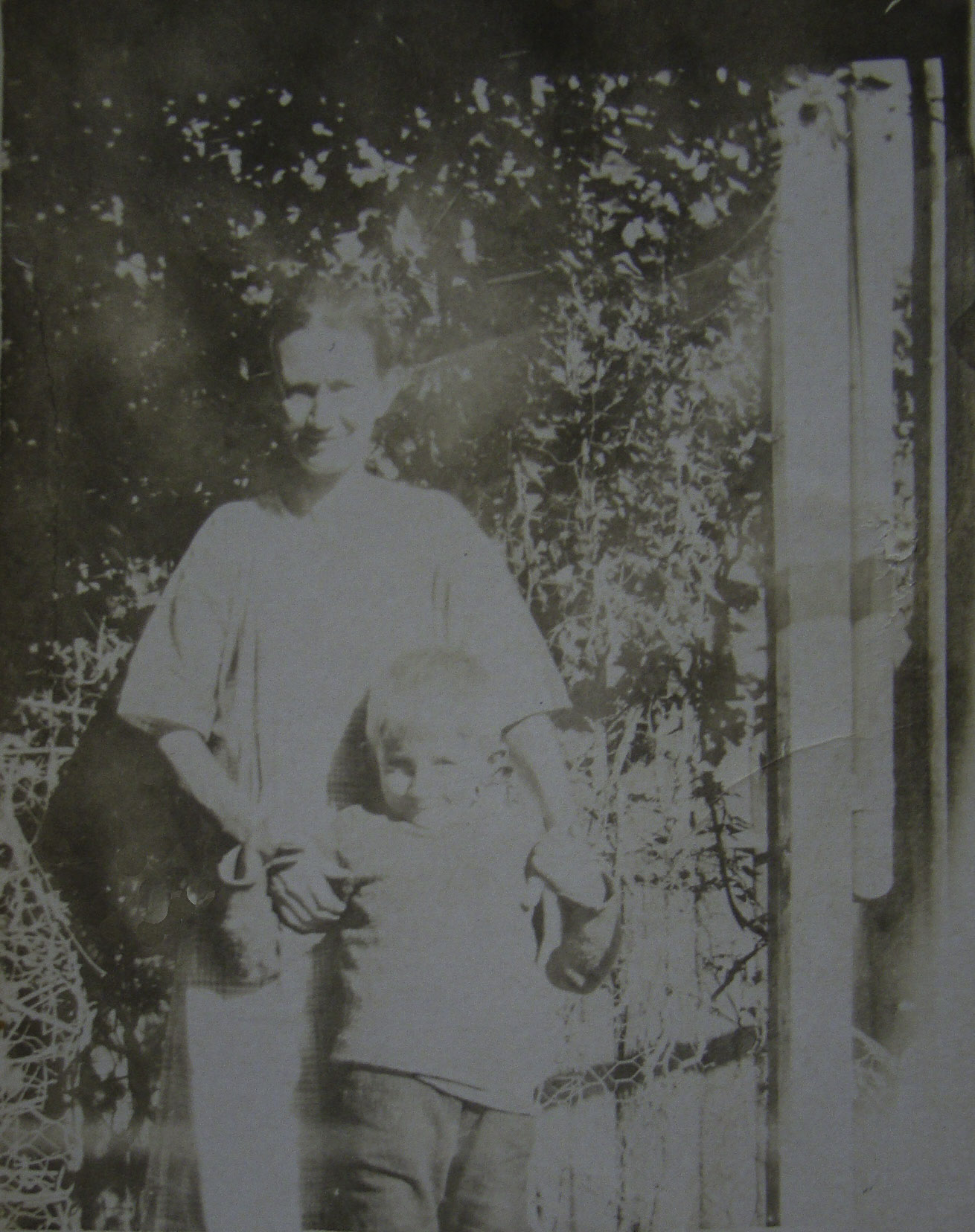
Life was not easy and the price of wool (which was the main focus on Marma) was not stable. There also seems to have been sustained periods of drought. Grandma Rose refers to the difficulties in a letter to Harry in November 1929. She died of a heart attack on 30th December 1929. The old shearing shed is still there, we walked through it when we visited in September 2014. The house is also still standing, but in a state of disrepair. Some changes have been made, but the slab walls in the kitchen seem to be original.
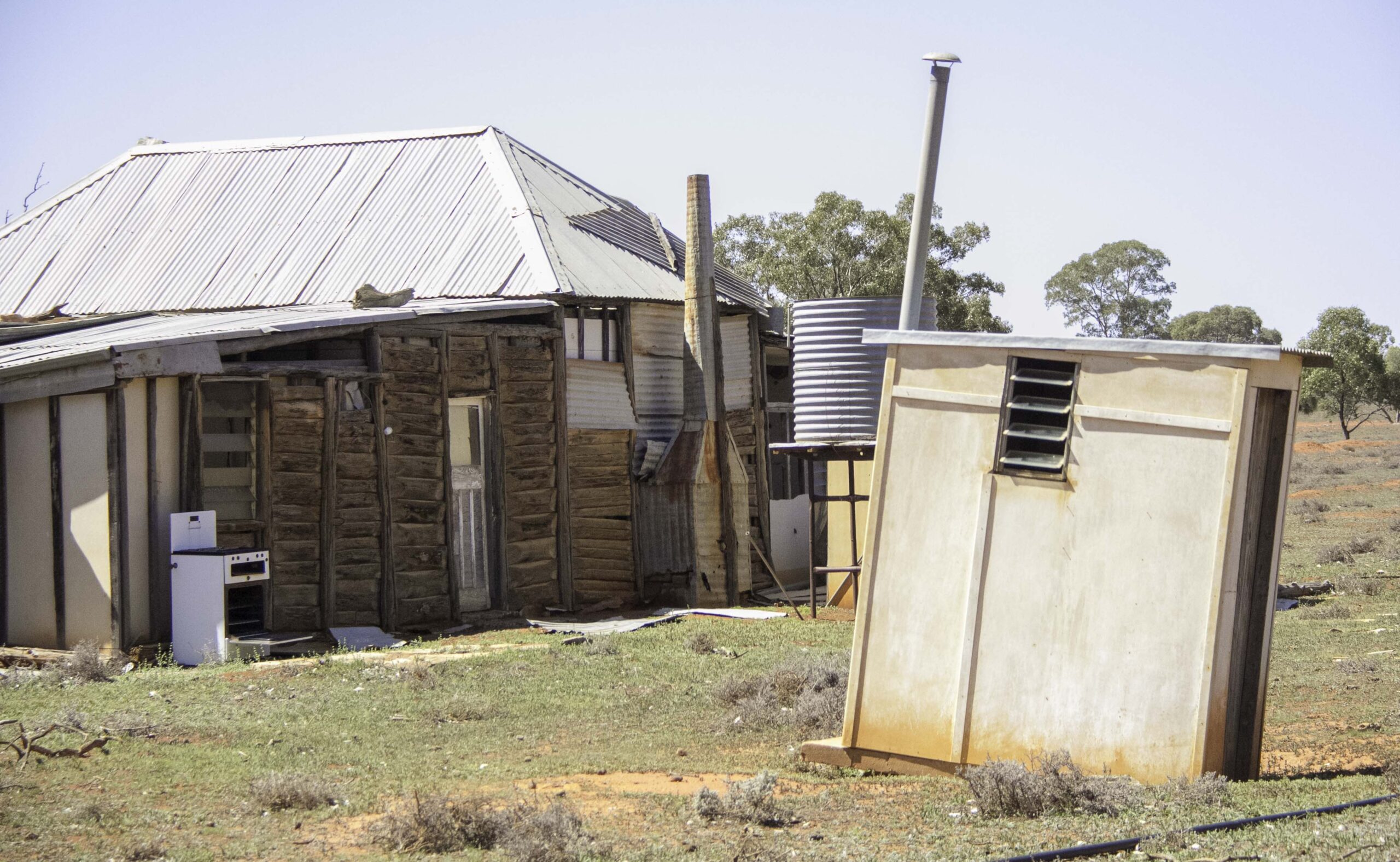
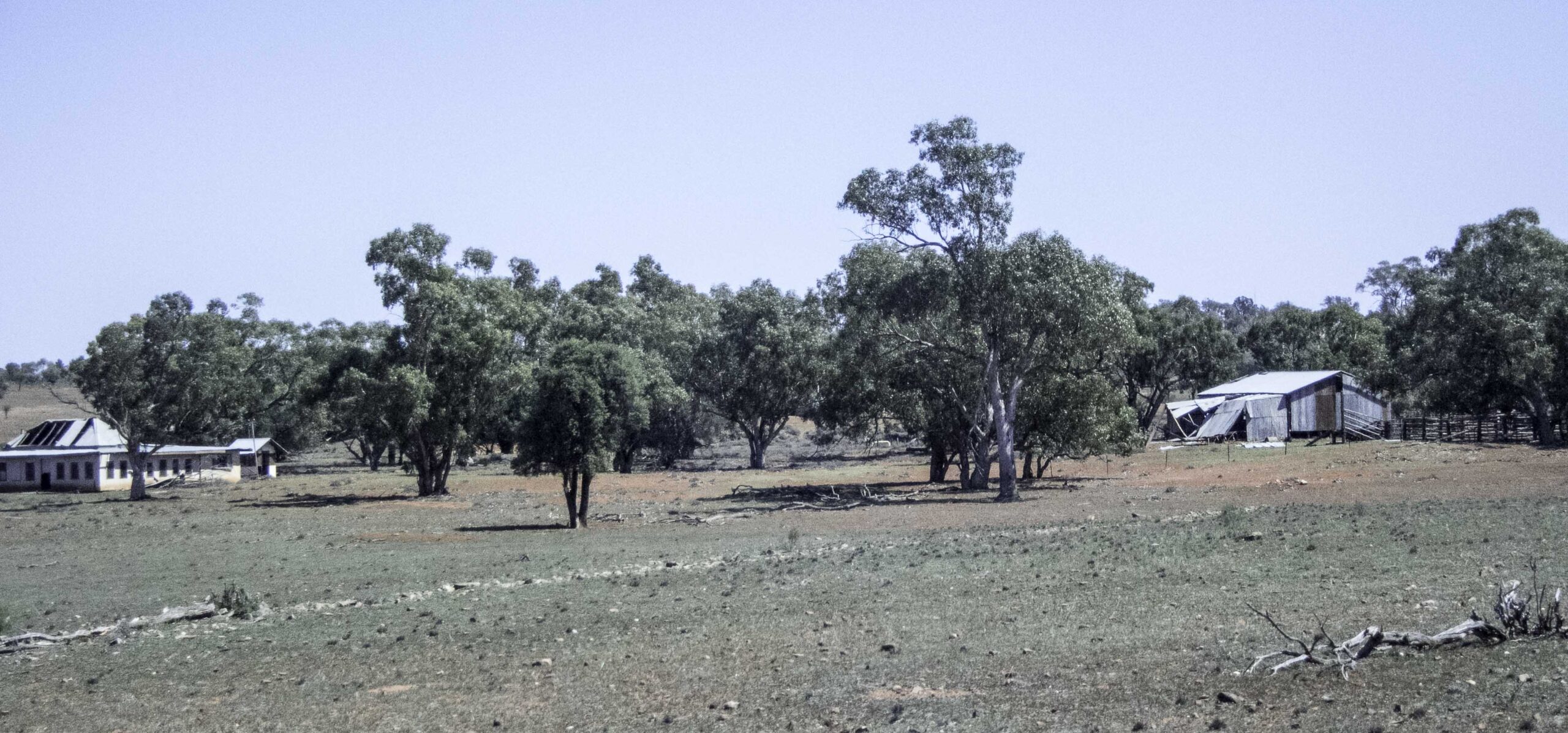
Grace married Cecil Vincent in 1928 and set up a home in Lindsay St Cobar, where her grandson Eric (my second cousin, Jean’s son) still lives. The family seem to have used this as a ‘town’ base and the younger children may have stayed there when they went to school.
Grandma Rose died 30th Dec 1929 (Helen’s letter early 1930 1930 Feb 18 HHS to HJH.pdf)
1930-dad-sheep.jpg Could also have been 20s. Also likely that was when dad went droving and worked as a camp cook.
1929 Harry bought a truck, which he used to carry loads, perhaps for other people as a contractor. Not long later, he had an unfortunate experience: 1929 Harry H Robbery.pdf
“Highway Robbery” reported in the Dubbo ‘Western Age’ on Thursday 21st March
A mean Theft
On his way from Sydney to Cobar a few days ago Mr Harry Holland, driving his recently purchased motor lorry, carrying a load of corrugated iron, piping and troughing, ran out of petrol when within about 5 miles of Narromine.
He found it necessary to walk into Narromine to procure further supplies before he could continue his journey, and his surprise can be imagined when he returned to find that some person or persons had transferred the whole of his load but had overlooked one important detail – to leave any address or the direction taken.
It is to be hoped that, for the protection of the travelling public, the miscreants can be located and when found made an example of.
The “Narromine News and Trangie Advocate” picked up the story on 3rd April and added a rather more truthful finish. 1929_04_3_narrominenewsandtrangieadvocate.jpg
On his way from Sydney to Cobar recently Mr Harry Holland, driving his recently purchased motor lorry carrying a load of corrugated iron, piping and troughing, ran out of petrol when within 5 miles of Narromine. He found it necessary to walk into Narromine to procure further supplies before he could continue his journey and his surprise can be imagined when he returned to find that some person or persons had transferred the whole of his load, but had overlooked one important detail – to leave any address or the direction taken. What Harry said when he landed back will not be printed in the news.
1930s Mail run, Drover and camp cook. He was also a mailman running mail out from Cobar. These journeys would usually take a few days, depending on the route. (document)
1930 Nov 12 HJH Mail Route Times.pdf
1930 Oct 5 HJH Mail Route Transfer.pdf
Helen went to Sydney soon after their mother died, to study nursing, along with Cath. She wrote to dad in February 1930, saying how lonely she was. They were at The Far West Children’s Home in Manly. 1930 Feb 18 HHS to HJH.pdf
Henry Charles married Hylda in 1933. Hylda was already 55, so they had no children. Although Grace was somewhat suspicious of Hylda’s motives, she seems to have been fairly well accepted and her family members, including, as Grace reported, her nieces and nephews visited from time to time. This is how dad met Dorothy, who was actually 8 years older than he was.
The Stephen family came into the picture.
The Stephens – include letters, starting with Mim in 1935 1935 Sep 12 Mim Stephen to HJH.pdf
HJH married Alice Dorothy Stephen Photo together x2
| 1939 Marriage Registration Date: | 16th December 1939 |
| Registration Place: | Waverley, New South Wales, Australia |
| Spouse: | Alice Dorothy Stephen |
| Registration Number: | 23668 |
This Post Has 2 Comments
Gee, lots to process
Yup. That’s why it’s taking so long.